Graphene is often described as the thinnest, strongest, and stiffest material known - a claim that made waves in the early 2000s. Those properties have made it one of the most studied materials of the modern era.1,2
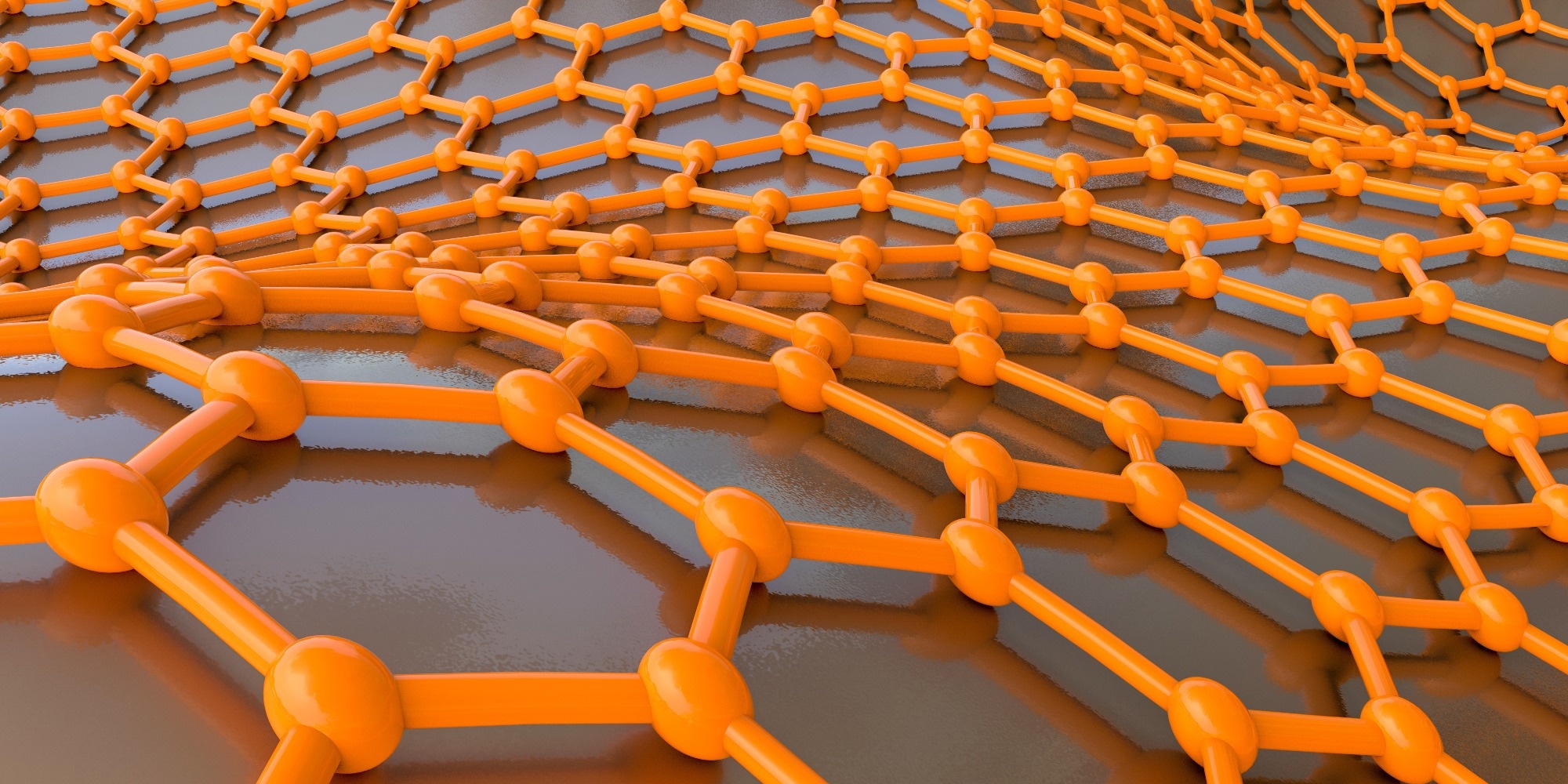 Image Credit: Kateryna Kon/Shutterstock.com
In recent years, however, several high-profile studies have raised a more specific question: Is graphene still the best benchmark for mechanical performance at the nanoscale? New carbon nanomaterials, including carbyne, diamond nanothreads, and monolayer amorphous carbon, have demonstrated properties that may rival or even exceed those of graphene in certain metrics.
The answer depends on how we define “strong”. Graphene remains the benchmark for in-plane stiffness in two-dimensional materials, but other nanoscale carbons may perform better in tensile strength, specific strength, or fracture toughness.
Saving this article for later? Download a PDF here.
Why Graphene Became a Benchmark of Strength
Graphene’s mechanical properties come from its atomic structure. Each carbon atom forms three strong covalent bonds through sp2 hybridization in a hexagonal two-dimensional lattice.3 This highly ordered network distributes mechanical stress very efficiently across the sheet.
As a result, graphene has a Young’s modulus of about 1 TPa and an intrinsic tensile strength of around 130 GPa. In practical terms, it is nearly 100 times stronger than steel while still remaining highly flexible. It can sustain elastic strains of roughly 15 % to 20 % before fracture. This combination of stiffness, strength, and flexibility has driven interest in graphene for lightweight aerospace composites, advanced sporting materials, and flexible electronic sensors.4
Even so, graphene’s exceptional intrinsic properties are difficult to preserve outside ideal laboratory conditions. Large-scale synthesis methods often introduce defects, grain boundaries, and surface contamination that disrupt the lattice and reduce strength. Maintaining a pristine two-dimensional crystal over large areas remains a major challenge.5
These limitations have encouraged researchers to study other carbon nanostructures that may retain very high strength while performing better under realistic conditions.
Carbyne: A One-Dimensional Theoretical 'Titan'
Carbyne, also known as linear acetylenic carbon, consists of a single chain of carbon atoms connected by sp-hybridized bonds. Unlike graphene, which is a two-dimensional sheet, carbyne is a one-dimensional material.
Recent computational and experimental studies suggest that carbyne may exceed graphene in tensile strength. Field-ion microscopy measurements have reported ultimate tensile strengths of 270 GPa at 5 K and 251 GPa at 77 K. These values are more than double the commonly cited tensile strength of graphene.6
Estimates of carbyne’s Young’s modulus vary widely. Some theoretical models suggest a nominal value of about 32 TPa, but that figure depends strongly on how the effective cross-sectional area of the atomic chain is defined. When more standardized definitions are used, carbyne remains extremely stiff, though less dramatically separated from graphene in volumetric terms.
Its main weakness is stability. Carbyne is highly reactive and prone to cross-linking or structural rearrangement. In most experiments, stable chains must be confined inside double-walled carbon nanotubes to prevent degradation. That currently limits practical use.
Diamond Nanothreads: Strength in the One Dimension
Diamond nanothreads are another promising carbon nanostructure. These one-dimensional materials are produced by high-pressure polymerization of benzene and contain carbon atoms bonded in a diamond-like sp3 configuration.
Molecular dynamics simulations suggest that diamond nanothreads have an axial stiffness of about 850 GPa and a tensile strength near 134 GPa. These values are close to those reported for graphene. Their main advantage, however, is very high specific strength, often described as tenacity.7
Because they combine high strength with low density, diamond nanothreads are attractive candidates for ultra-strong fibers and reinforcement materials in advanced composite systems. Their appeal is not that they clearly exceed graphene in every mechanical measure, but that they offer a strong strength-to-weight profile.
Monolayer Amorphous Carbon (MAC): A New Level of Toughness
The strongest recent challenge to graphene does not come from a stiffer material, but from a tougher one. Graphene is known to be brittle. Once a crack forms, it can propagate rapidly and cause sudden failure.
A 2025 study published in Matter reported that monolayer amorphous carbon is eight times tougher than graphene. Unlike graphene’s ordered hexagonal lattice, monolayer amorphous carbon consists of a disordered network of five-, six-, seven-, and eight-membered rings.8
This disordered structure gives the material an intrinsic toughening mechanism. When a crack forms, the irregular network can force it to blunt, branch, or deflect, which absorbs more energy before failure. Graphene may still withstand a higher peak load in an ideal, defect-free sample, but monolayer amorphous carbon appears more resistant to cracking and impact under realistic conditions.
For engineering applications, monolayer amorphous carbon is a strong candidate for flexible electronics and protective coatings, where defect tolerance matters as much as peak strength.
Comparative Analysis: Redefining Strength at the Nanoscale
Whether a material is stronger than graphene depends largely on how strength is defined – different materials excel in different mechanical metrics.
| Material |
Primary Strength Metric |
Performance vs. Graphene |
| Graphene |
In-plane Stiffness |
The 1.0 TPa benchmark for 2D systems |
| Carbyne |
Ultimate Tensile Stress |
≈2x stronger than graphene (270 GPa vs 130 GPa). |
| DNT |
Specific Strength (Tenacity) |
Exceeds graphene per unit mass (4.1 x 10⁷ Nm/kg) |
| MAC |
Fracture Toughness |
8x more resistant to cracking and sudden failure |
Carbyne and DNTs offer superior metrics in specific 1D orientations, but they are more difficult to manufacture at scale than graphene. Graphene remains the most practical material due to its established synthesis methods, such as chemical vapor deposition (CVD).
However, the discovery of MAC suggests that the future of the field may lie in "designed disorder," where the goal is no longer just the highest possible bond energy, but the most resilient topology.
First Graphene sat down with AZoNano to explain how it's successfully scaling graphene.
Conclusion
Graphene has not lost any importance - or even lost its position as the strongest nanoscale material - but it is no longer the only reference point for nanoscale mechanical performance. Carbyne appears to lead in one-dimensional tensile strength. Diamond nanothreads stand out when low weight and high specific strength matter most. Monolayer amorphous carbon now appears to lead in toughness and structural reliability.
Rather than asking what is the next 'wonder material' after graphene, it may be more useful to ask which material is strongest where it counts.
References
- Savage N. Materials science: Super carbon. Nature. 2012;483(7389):S30-S1. DOI:10.1038/483S30a, https://www.nature.com/articles/483S30a
- Novoselov KS, Geim AK, Morozov SV, Jiang D-e, Zhang Y, Dubonos SV, et al. Electric field effect in atomically thin carbon films. science. 2004;306(5696):666-9. DOI:10.1126/science.1102896, https://www.science.org/doi/10.1126/science.1102896
- Geim AK, Novoselov KS. The rise of graphene. Nature Materials. 2007;6(3):183-91. DOI:10.1038/nmat1849, https://www.nature.com/articles/nmat1849
- Cao Q, Geng X, Wang H, Wang P, Liu A, Lan Y, et al. A Review of Current Development of Graphene Mechanics. Crystals. 2018;8(9):357. DOI:10.3390/cryst8090357, https://www.mdpi.com/2073-4352/8/9/357
- Lin L, Peng H, Liu Z. Synthesis challenges for graphene industry. Nature Materials. 2019;18(6):520-4. DOI:10.1038/s41563-019-0341-4, https://www.nature.com/articles/s41563-019-0341-4
- Kotrechko S, Mikhailovskij I, Mazilova T, Sadanov E, Timoshevskii A, Stetsenko N, et al. Mechanical properties of carbyne: experiment and simulations. Nanoscale Research Letters. 2015;10(1):24. DOI:10.1186/s11671-014-0723-2, https://nanoscalereslett.springeropen.com/articles/10.1186/s11671-014-0723-2
- Roman RE, Kwan K, Cranford SW. Mechanical Properties and Defect Sensitivity of Diamond Nanothreads. Nano Letters. 2015;15(3):1585-90. DOI: 10.1021/nl5041012
- Shin B, et al. Intrinsic toughening in monolayer amorphous carbon nanocomposites. Matter. 2025;8(4):102000. DOI: 10.1016/j.matt.2025.102000
Disclaimer: The views expressed here are those of the author expressed in their private capacity and do not necessarily represent the views of AZoM.com Limited T/A AZoNetwork the owner and operator of this website. This disclaimer forms part of the Terms and conditions of use of this website.