Once used to fold DNA into nanoscale shapes, DNA origami is now emerging as a programmable platform for smarter diagnostics, targeted therapies, and next-generation nano-enabled devices
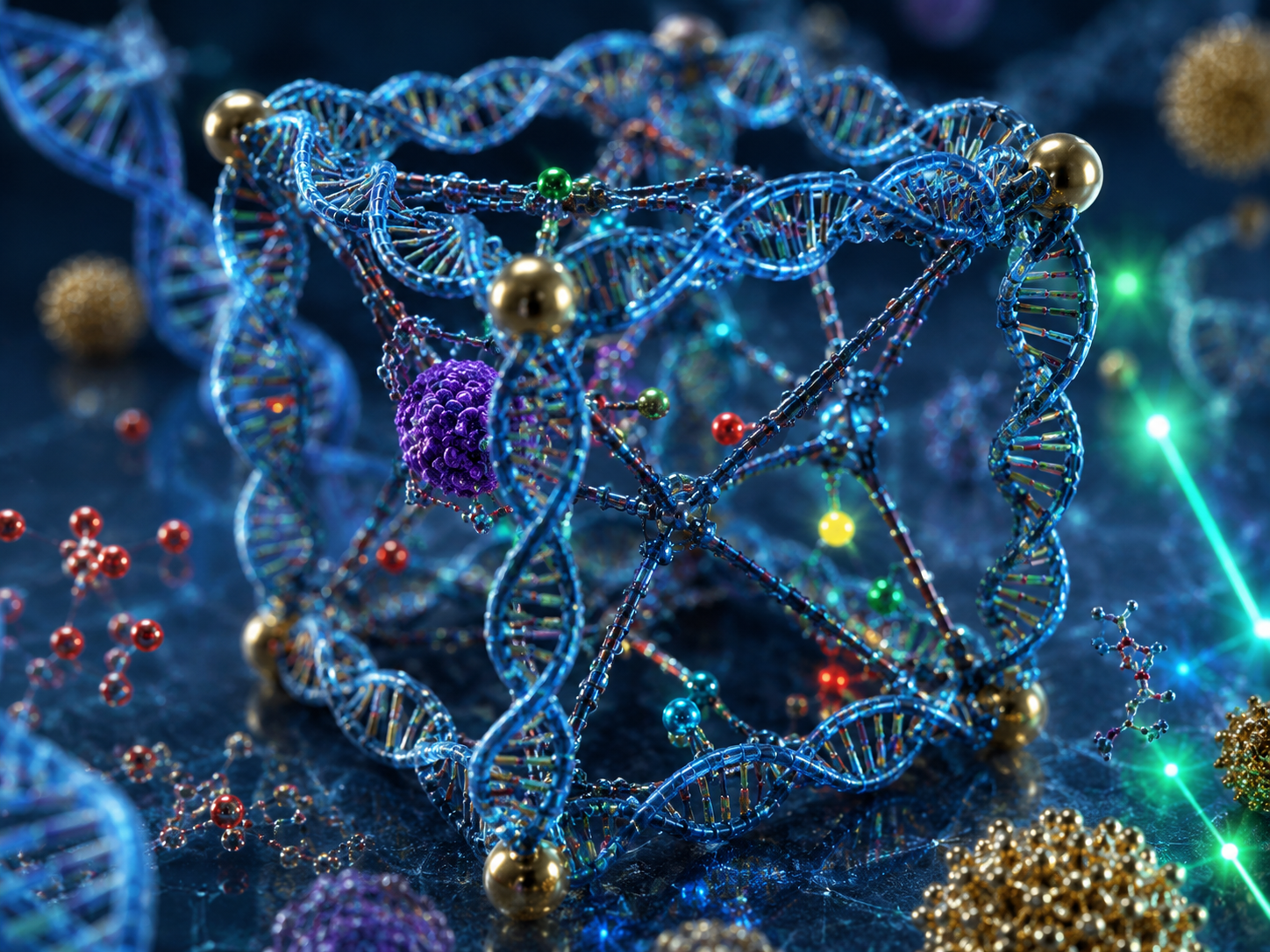
From Blueprint to Breakthrough: How Far Can We Fold DNA Origami for Nano-Enabled Technologies? Image Credit: AI-generated image / OpenAI
A 'Perspective' article recently published in the journal JACS Au reviewed advances in deoxyribonucleic acid (DNA) origami for nano-enabled technologies.
DNA Origami Design and Fabrication
Over the last decade, advances in DNA nanotechnology have enabled programming of Watson-Crick base pairing for the assembly of nanoscale three-dimensional (3D) structures.
While complex DNA architectures were created using robust, modular design software, practical implementation was limited to a few research groups because in silico design remained challenging.
A pioneering study addressed those limitations by implementing a top-down design approach. Initially, the target structure is converted into a polyhedral mesh, then its 3D graph is derived, and a spanning tree is computed.
Subsequently, the spanning tree algorithm directs the scaffold strand along an Eulerian circuit, completing the origami by generating staple sequences. For improved rigidity, the wireframe motif uses interconnected double helices (DX).
After sequence design, structures are created using traditional annealing protocols. Staple sequence generation is automated, and atomistic models are generated by the DAEDALUS software, while their conformations in solution are predicted by the CanDo software.
Responsive and Hybrid DNA Nanostructures
The combination of responsive and hybrid functionalities defines the frontier of origami design, turning static nanostructures into multifunctional, dynamic platforms.
Hybrid DNA origami includes materials such as small molecules, inorganic nanoparticles, polymers, or proteins, either via addressable binding sites or direct conjugation. Hybrid systems facilitate diverse applications such as catalysis, biosensing, and the assembly of photonic and electronic devices.
Responsive DNA nanostructures release cargo, change shape, or perform mechanical work while responding to external stimuli like temperature, pH, specific biomolecules, or light. Examples include triggered drug release by DNA boxes with lock-and-key mechanisms.
Such innovations exploit the programmability of DNA to generate novel materials that adjust to their environment, creating opportunities for diagnostics, adaptive nanomanufacturing, and precision medicine.
Algorithmic Innovations and Computational Tools
The precision and complexity needed for modern origami designs are achieved by integrating algorithmic innovations and advanced computational tools.
For instance, oxDNA and CanDo can simulate folding pathways, thermal fluctuations, and mechanical properties, allowing researchers to forecast the behavior and stability of their designs before synthesis.
Algorithmic methods also enabled the design of twisted, dynamically reconfigurable, or curved structures based on principles of computational geometry and graph theory.
Artificial intelligence (AI) and machine learning (ML) are currently utilized to investigate vast design spaces, minimize misfolding, and optimize sequence design. This is paving the way for high-throughput and automated origami fabrication. These computational advances democratized access to DNA nanotechnology and accelerated innovation.
2D vs. 3D Architectures
The advancement from two-dimensional (2D) constructs to complex 3D architectures marked the progression of DNA origami, with each offering distinct advantages. Yet the real potential of origami was unlocked with the advent of 3D architectures.
Researchers created diverse 3D objects, including wireframe cages, polyhedra, tubes, and boxes, using the helical twist of DNA and by incorporating crossover points.
These structures enhanced the available cargo capacity and surface area, facilitated the synthesis of nanomechanical devices, the construction of scaffolds for tissue engineering, and the controlled release and encapsulation of therapeutic agents.
Designing both flexible and rigid 3D frameworks is crucial for applications like the templating of inorganic materials and targeted drug delivery. Recent advances have extended DNA origami beyond structural design, enabling active biological applications. Studies have shown that DNA-based nanostructures can carry gene-encoding sequences and support protein expression in both intracellular and extracellular environments.
Applications
The unique addressability, biocompatibility, and programmability of DNA nanostructures have facilitated several applications, with several being explored for translation beyond proof-of-concept studies. In precision medicine, DNA nanostructures can encapsulate and deliver therapeutic agents with high specificity to target cells or tissues.
Boxes, tubes, and nanocages can be designed to protect drugs from premature degradation and release them in response to enzymes, pH, or surface markers unique to diseased cells, thanks to the programmable geometry of DNA nanostructures.
Recent research has shown the potential of DNA origami carriers for immunomodulators and chemotherapeutics, leading to decreased off-target toxicity and enhanced therapeutic efficacy in preclinical models.
DNA origami’s exceptional addressability and spatial precision make it a suitable scaffold for diagnostic devices and biosensors. Researchers developed very sensitive platforms for detecting proteins, nucleic acids, small molecules, and pathogens by arranging aptamers, quenchers, or fluorophores at defined positions.
Sensors based on DNA origami can achieve multiplexed detection and single-molecule sensitivity. Origami-enabled diagnostic devices can rapidly detect cancer biomarkers, environmental toxins, and viral particles, offering potential for early disease diagnosis and point-of-care testing.
Other applications include storage and computing, nanofabrication, quantum and plasmonic devices, DNA-templated device fabrication, and therapeutic nanorobots.
In conclusion, DNA origami has evolved from nanoscale construction to a foundational technology poised to redefine the frontiers of diagnostics, therapeutics, and optoelectronics. Yet several challenges remain, including structural stability under operational conditions, nuclease degradation, physiological stability, immunogenicity, biosafety, cost-effective manufacturing, integration with other systems and nanomaterials, and scalability.
Download your PDF copy by clicking here.
Disclaimer: The views expressed here are those of the author expressed in their private capacity and do not necessarily represent the views of AZoM.com Limited T/A AZoNetwork the owner and operator of this website. This disclaimer forms part of the Terms and conditions of use of this website.